
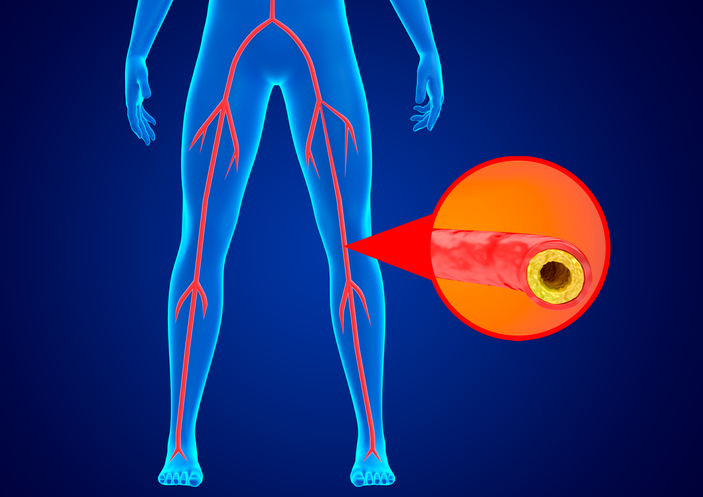
Peripheral Artery Disease (PAD) Treatment in NYC with Dr. Karl Zhang
Leg Pain When Walking? Poor Circulation May Be the Cause
Do your legs hurt, cramp, or become tired when you walk—but feel better when you stop and rest?
Do you experience cold feet, numbness, slow-healing wounds, or pain in your legs or feet?
These symptoms may be signs of Peripheral Artery Disease (PAD), a circulation disorder caused by narrowing or blockage of the arteries that supply blood to the legs and feet.
At 14 Street Medical Arts, Dr. Karl Zhang evaluates and treats patients with Peripheral Artery Disease and other vascular conditions.
For appropriately selected patients with significant arterial narrowing or blockage, treatment may include peripheral angiography and minimally invasive angioplasty to restore blood flow.
What Is Peripheral Artery Disease?
Peripheral Artery Disease, commonly called PAD, occurs when arteries supplying the legs or other extremities become narrowed or blocked.
The most common cause is atherosclerosis, a buildup of fatty plaque inside the arteries.
As an artery becomes narrower, less oxygen-rich blood can reach the muscles and tissues of the legs and feet.
PAD most commonly affects the lower extremities.
Common Symptoms of Peripheral Artery Disease
PAD does not always cause obvious symptoms.
When symptoms occur, they may include:
-
Leg pain while walking
-
Calf cramping
-
Thigh or buttock discomfort
-
Leg fatigue or weakness
-
Pain that improves with rest
-
Cold feet or toes
-
Numbness or tingling
-
Weak pulses in the feet
-
Changes in skin color
-
Slow-healing wounds
-
Foot or toe sores
-
Pain in the feet or legs while resting
One of the classic symptoms is claudication—leg discomfort that develops during walking or exercise and improves after stopping to rest.
Don't Assume Leg Pain Is Just Arthritis or Aging
Leg pain is often blamed on arthritis, back problems, neuropathy, or simply getting older.
But sometimes the problem is poor arterial circulation.
If your calf, thigh, or buttock begins to hurt after walking a certain distance and improves after resting, PAD should be considered.
Finding PAD is important not only because of the legs.
PAD is evidence of vascular disease, and people with PAD may also have an increased risk of heart attack and stroke.
Who Is at Risk for PAD?
Risk increases in people with:
-
Diabetes
-
High blood pressure
-
High cholesterol
-
Smoking history
-
Cardiovascular disease
-
Chronic kidney disease
-
Increasing age
-
History of atherosclerosis
Patients with several of these risk factors should pay particular attention to new symptoms involving their legs and feet.
Meet Dr. Karl Zhang
Dr. Karl Zhang provides evaluation and treatment for patients with Peripheral Artery Disease at 14 Street Medical Arts.
Patients experiencing leg pain while walking, poor circulation, slow-healing wounds, or other symptoms of arterial disease can receive a comprehensive vascular evaluation.
When significant arterial disease is identified, Dr. Zhang can determine whether the patient may benefit from medical management or an interventional treatment designed to improve blood flow.
For selected patients, treatment may include peripheral angiography followed by angioplasty when appropriate.
How Is Peripheral Artery Disease Diagnosed?
Evaluation begins with a medical history and physical examination.
Your physician may ask:
-
When does your leg pain occur?
-
Does walking trigger the pain?
-
Does resting make it disappear?
-
Do you have diabetes?
-
Do you smoke or have a history of smoking?
-
Do you have high cholesterol?
-
Do you have high blood pressure?
-
Have you developed sores that are slow to heal?
Additional vascular testing may then be recommended.
Vascular Ultrasound
A vascular ultrasound uses sound waves to evaluate blood flow through arteries.
It is non-invasive and can help identify areas where circulation may be reduced because of arterial narrowing.
Depending on the patient's symptoms, additional vascular studies may be recommended.
Peripheral Angiogram
When more detailed evaluation is necessary, a physician may recommend a peripheral angiogram.
During angiography, contrast material and X-ray imaging are used to visualize the arteries and identify the location and severity of arterial narrowing or blockage.
The results can help determine whether an artery may be suitable for angioplasty or another form of revascularization.
What Is Peripheral Angioplasty?
Peripheral angioplasty is a minimally invasive procedure used to open certain narrowed or blocked arteries.
Instead of making a large surgical incision, the physician advances a thin catheter through a blood vessel toward the area of narrowing.
A small balloon positioned at the blockage is inflated.
The balloon expands the narrowed portion of the artery, helping restore blood flow through the vessel.
After the artery has been opened, the balloon is deflated and removed.
Angioplasty and Stent Placement
In some cases, angioplasty alone may be sufficient.
In other cases, the physician may recommend placing a stent.
A stent is a small mesh-like tube placed inside an artery to help support the vessel and keep it open.
Whether a patient needs balloon angioplasty, a stent, another endovascular treatment, or surgery depends on the location and severity of the arterial disease and the patient's overall medical condition.
Benefits of Minimally Invasive PAD Treatment
For an appropriately selected patient, restoring blood flow may help:
-
Reduce leg pain
-
Improve walking ability
-
Improve circulation
-
Promote healing of certain wounds
-
Reduce ischemic rest pain
-
Protect threatened tissue
-
Improve mobility and quality of life
Not every patient with PAD requires angioplasty.
Many patients can initially be treated with medication, exercise, smoking cessation, cholesterol management, diabetes control, and other cardiovascular risk-reduction strategies.
PAD and Diabetes
Peripheral Artery Disease is particularly important for patients with diabetes.
Diabetes can damage blood vessels and nerves, making it possible for a patient to have significant circulation problems without experiencing typical pain.
A small wound on the foot may also become difficult to heal when blood circulation is inadequate.
Patients with diabetes should pay attention to:
-
Foot wounds
-
Changes in skin color
-
Cold feet
-
Numbness
-
Toe discoloration
-
Slow-healing cuts
-
New leg pain
Early evaluation can be particularly important in this population.
PAD and Non-Healing Wounds
A wound requires adequate blood flow to heal.
When severe PAD reduces circulation to the foot or leg, even a relatively small wound may become difficult to heal.
Poor circulation can increase the risk of:
-
Infection
-
Tissue damage
-
Gangrene
-
Limb-threatening complications
Restoring blood flow may be an important component of treatment for selected patients with severe PAD and non-healing wounds.
PAD Is More Than a Leg Problem
Peripheral Artery Disease is a manifestation of atherosclerosis.
A patient with plaque buildup in the arteries of the legs may also have vascular disease elsewhere in the body.
That is why PAD is associated with an increased risk of:
-
Heart attack
-
Stroke
-
Coronary artery disease
-
Serious limb complications
Treatment therefore involves more than simply improving circulation in one artery.
Long-term cardiovascular risk reduction is an essential part of PAD management.
Comprehensive PAD Treatment
Depending on the severity of your condition, treatment may include:
-
Smoking cessation
-
Walking and exercise programs
-
Cholesterol management
-
Blood pressure control
-
Diabetes management
-
Antiplatelet or other medications when appropriate
-
Peripheral angiography
-
Balloon angioplasty
-
Stent placement when appropriate
-
Other vascular procedures
-
Surgical referral when necessary
The treatment plan should be individualized for each patient.
When Is Angioplasty Considered?
Angioplasty is not necessary for every patient diagnosed with PAD.
It may be considered when arterial narrowing or blockage is significant and symptoms remain important despite appropriate medical management, or when inadequate circulation threatens tissue or limb health.
Dr. Zhang can evaluate the patient's symptoms, vascular studies, medical history, and overall health to determine whether an endovascular procedure is appropriate.
When Poor Circulation Becomes an Emergency
Seek urgent medical attention for symptoms such as:
-
Sudden severe leg or foot pain
-
A suddenly cold foot or leg
-
Sudden loss of sensation
-
Sudden weakness or inability to move the foot
-
Rapidly changing skin color
-
Black or gangrenous tissue
-
Rapidly worsening wounds
A sudden loss of arterial blood flow can be a medical emergency.
Why Choose Dr. Karl Zhang at 14 Street Medical Arts?
Patients with suspected or diagnosed Peripheral Artery Disease can receive comprehensive vascular evaluation and treatment with Dr. Karl Zhang.
Dr. Zhang evaluates patients experiencing:
-
Peripheral Artery Disease
-
Poor circulation
-
Leg pain while walking
-
Claudication
-
Arterial narrowing
-
Non-healing wounds associated with poor circulation
-
Foot and leg circulation problems
For appropriately selected patients, treatment may include peripheral angiography and minimally invasive angioplasty to open narrowed or blocked arteries and improve blood flow.
Convenient Manhattan Locations
14 Street Medical Arts serves patients throughout New York City at convenient Manhattan locations:
East 14 Street MedicalArts
332 East 14th Street
New York, NY 10003
West 14 Street MedicalArts
110 West 14th Street
New York, NY 10011
Columbus Ave MedicalArts
912 Columbus Avenue
New York, NY 10025
Radiology MedicalArts
500 East 14th Street
New York, NY 10009
We conveniently serve patients throughout the East Village, Union Square, Gramercy Park, Chelsea, Greenwich Village, Flatiron District, Upper West Side, and surrounding New York City neighborhoods.
Frequently Asked Questions About Peripheral Artery Disease
What is the most common symptom of PAD?
One of the classic symptoms is leg pain, aching, fatigue, or cramping that occurs during walking and improves after resting. This is known as intermittent claudication.
Is Peripheral Artery Disease dangerous?
It can be. Severe PAD can reduce circulation enough to cause non-healing wounds and tissue damage. PAD is also associated with an increased risk of heart attack and stroke.
What is angioplasty for PAD?
Peripheral angioplasty is a minimally invasive procedure in which a catheter with a small balloon is advanced to a narrowed or blocked artery. The balloon is inflated to open the artery and improve blood flow.
Will I need a stent?
Not necessarily. Some arteries can be treated with angioplasty alone, while others may require a stent or another treatment. The appropriate approach depends on the individual arterial blockage.
Does everyone with PAD need angioplasty?
No. Many patients are treated with exercise, medication, smoking cessation, and management of diabetes, cholesterol, and blood pressure. Angioplasty or another revascularization procedure is considered when clinically appropriate.
Can PAD cause wounds that don't heal?
Yes. Severe reduction in arterial circulation can prevent wounds on the feet or legs from healing properly. Non-healing wounds should be evaluated promptly.
Schedule a Peripheral Artery Disease Evaluation with Dr. Karl Zhang
If you experience leg pain while walking, calf cramping, cold feet, poor circulation, or a wound that is not healing, don't assume it is simply part of getting older.
Schedule an appointment with Dr. Karl Zhang at 14 Street Medical Arts for a comprehensive vascular evaluation.
If significant arterial narrowing or blockage is identified, Dr. Zhang can discuss appropriate treatment options, including peripheral angiography and minimally invasive angioplasty when clinically indicated.
Early diagnosis and appropriate treatment can help improve circulation, preserve mobility, and protect the health of your legs and feet.
About 14 Street Medical Arts
14 Street Medical Arts is a multi-specialty medical practice serving New York City through convenient Manhattan locations. We provide specialty medicine, vascular evaluation, vascular ultrasound, diagnostic imaging, primary care, preventive medicine, and coordinated healthcare services for patients throughout Manhattan.